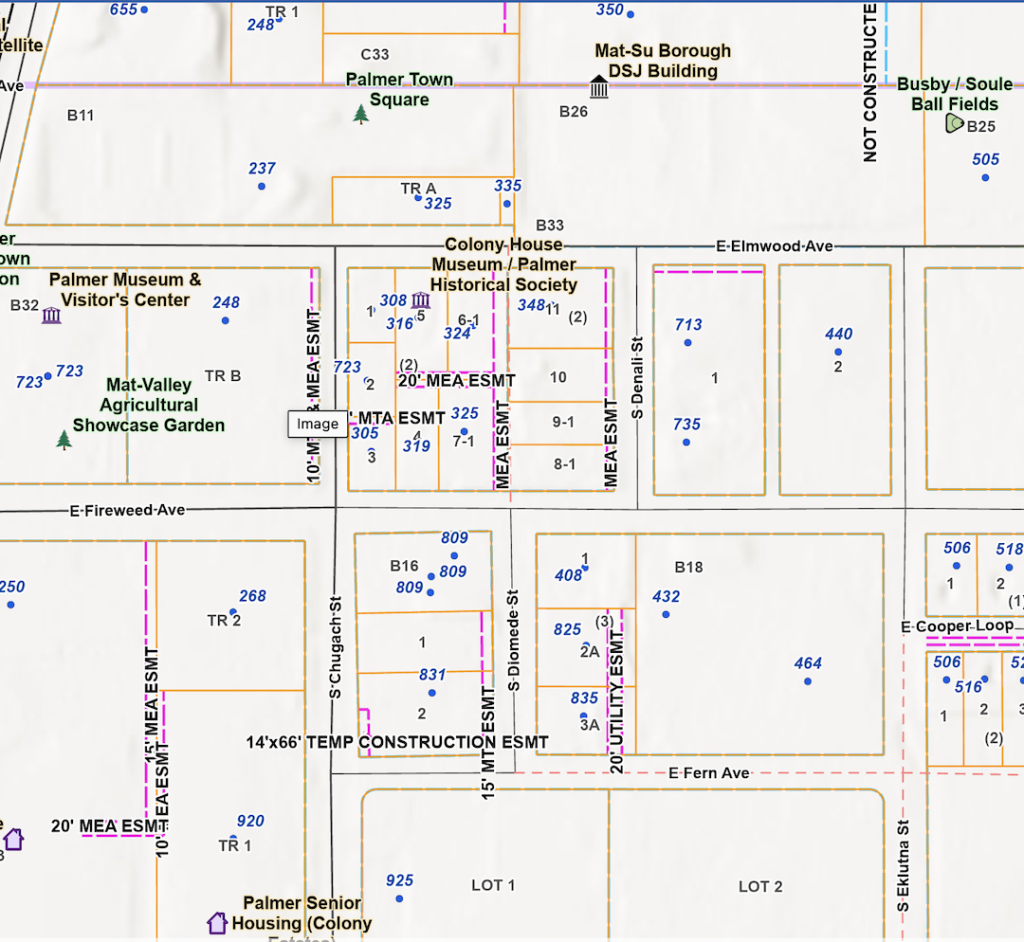
A plat is a fancy word for an official map. It shows how land is divided into lots, streets, and easements. The Borough property maps are plats.
Have you wondered what all those lines mean on a plat? Do you wonder what happens when someone wants to divide a piece of property or change a property boundary? That’s where platting comes in.
Tyler Young is the Borough Platting Officer. He explains that platting deals with legal changes to property descriptions. That includes moving property lines, creating new lots, and dividing larger parcels into smaller properties. The platting process affects homeowners, developers, surveyors, and anyone buying or selling real estate.
The borough platting division answers questions from the public and surveyors. They guide property owners through proposed changes to plats.
The pre-application process is important. A property owner can describe a proposed project and receive feedback from borough departments, legal staff, and potentially state and federal agencies before moving forward.
Young explains the difference between a recorded plat and an as-built document. An as-built provides a snapshot of what is physically located on a property. This includes buildings, decks, driveways, and roads. That information isn’t generally displayed on the recorded plat.
Borough records may contain additional details. This includes information about easements, existing structures, soils, permits, and the history of a proposed property change. If you’re buying property, planning construction, or trying to understand where your rights and responsibilities begin and end, it’s worth asking for any additional records on the property from the borough.
Those records are important. Property information isn’t always straightforward. Young acknowledges that surveying mistakes happen and that documents on easements or utility access can be difficult to locate.
The borough works to identify existing easements during the platting process. Utilities are asked to provide information.
The Mat-Su Borough Platting Board approves, modifies, or denies platting actions. The board ensures that residents have an opportunity to express support, raise objections, and document concerns before decisions are made.
That creates a responsibility for residents. If you receive notice of a proposed subdivision or property boundary change near your home, read the notice, find out what is being proposed, and submit your questions or concerns during the public comment period. Young says the comments become part of the permanent public record. Speaking up early gives decision-makers information they might otherwise miss.
Young is working on revisions to Title 43, the borough subdivision code. The code was adopted in 2012 and has undergone several revisions. The latest was approved in 2022. The revisions are expected to come before the Assembly early next year. The goal is to make the process clearer and more accessible. It includes provisions for development on remote properties without road access.
The borough maintains a historical archive. Recorded plats are available through the State Division of Natural Resources. Supporting documents can be requested through the borough public records system. Staff continue to digitize older files. This includes hundreds of boxes of historical records stored in Anchorage.
The borough handles platting throughout its boundaries. This includes Palmer, Wasilla, and Houston. Municipalities can participate in the process. None has assumed its own platting authority.
Residents with questions can contact Young at Tyler.Young@matsu.gov or visit the borough planning department.
The bottom line for Mat-Su residents is this: know your property, check the records, and pay attention when changes are proposed. Waiting until a problem arises may be too late. Getting information and speaking up early can make a real difference.
You can look up at plat on myproperty.matsu.gov. The full interview with Young is on bigcabbageradio.org. Go to podcasts then Valley Edition.
Page 2 airs weekdays at 7 a.m., 9 a.m., 11:50 a.m., and 6 p.m.
Tune in at 89.7 in Palmer, 89.5 in Sutton, 88.3 in Chickaloon and Glacier View or online at bigcabbageradio.org.
Please support Page 2 News and Big Cabbage Radio. Become a member: Donate today at bigcabbageradio.org.
Mike Chmielewski reported this Page Two article and yours truly, Lee Henrikson produced it. If you have an idea for a Page 2 topic, please email us at page2@radiofreepalmer.org.
That’s it for today and the news on Page Two on Monday, October 12, 2026.